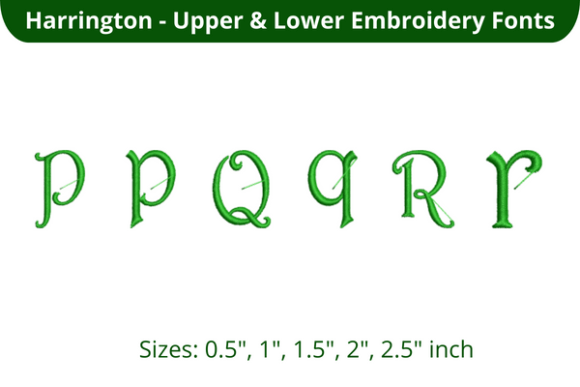
Harrington Font PQR Review for Small Business Merch
In the world of commercial embroidery, the difference between a generic product and a memorable brand often comes down to the smallest details. As an experienced designer who has stitched thousands of logos, I recently evaluated a new addition to my digital library: Harrington Font PQR. This is not just another decorative typeface; it is a strategic tool designed to elevate small business merch, branded patches, and custom apparel. Whether you are running a boutique, a local café, or a handmade shop on Etsy, the choice of your embroidery file directly impacts customer perception.
First Impressions: A Blend of Classic and Contemporary
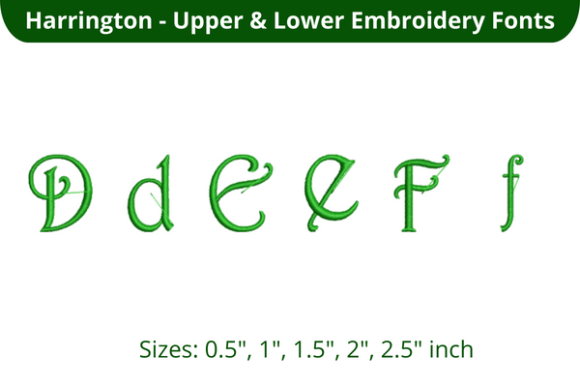
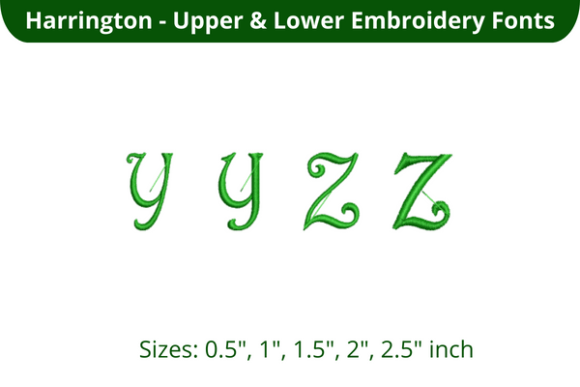
When I first opened the design files for Harrington Font PQR, the immediate feeling was one of professional reliability. The title suggests a classic foundation, yet the execution feels modern enough for today's market. Unlike overly ornate scripts that can become illegible when digitized, this font maintains clarity while offering a touch of personality. It strikes a balance between being friendly and authoritative.
This visual personality makes it incredibly versatile. For a bakery looking to embroider their name on aprons, it offers a warm, inviting feel without sacrificing readability. For a creative studio branding tote bags, it provides a clean, structured look that screams quality. The description promises high quality, and in my initial review, the stroke widths and spacing suggest it will hold up well under the tension of machine needles. It feels like a font that belongs on a premium label rather than a temporary decoration.
Real-World Applications for Brand Identity
The true test of any machine embroidery design is how it performs outside the hoop. I have been analyzing where Harrington Font PQR fits best within a small business ecosystem. Here is how it translates to real-world scenarios:
- Embroidered Patches: One of the most popular uses for this font is creating custom patches. Because the lettering is distinct, it works beautifully as a standalone badge for jackets or backpacks. It adds a layer of exclusivity that customers love, turning a simple garment into a collectible item.
- Staff Uniforms and Aprons: For service-oriented businesses like florists or coffee shops, consistency is key. Using Harrington Font PQR on staff uniforms creates a unified front. The font's legibility ensures that names and titles are easily readable from a distance, which builds trust with clients.
- Cap Embroidery: Caps are a staple of promotional merchandise. This font handles the curve of a cap front exceptionally well. When used for a logo accent or a simple slogan, it looks tailored and intentional rather than mass-produced.
- Tote Bag Design: In the era of sustainable shopping, branded tote bags are essential. Harrington Font PQR allows you to print a quote, a date, or a brand name that stands out against canvas or cotton blends. It transforms a functional item into a walking advertisement.
- Product Packaging Accents: For handmade brands, the unboxing experience matters. Imagine a tag attached to a piece of jewelry or a candle featuring your brand name in this font. It elevates the perceived value of the finished product immediately.
Furthermore, this font is excellent for Back To School themed projects. Schools, clubs, and sports teams often need personalized gear. The font's clear structure makes it ideal for writing names, dates, or quotes on caps and shirts, ensuring that every student or team member looks part of a cohesive group.
Strategic Considerations and Limitations
While Harrington Font PQR is a robust asset, every designer knows that success lies in knowing where to apply caution. There are specific scenarios where this font requires careful planning to ensure the final output matches the vision.
Small Patch Sizes: If you are designing a patch smaller than two inches, you must be mindful of stitch density. Fine details in the letters may fill in if the scale is too small, reducing readability. Always test the minimum size before committing to a bulk order.
Curved Surfaces and Cap Fronts: While the font handles curves well, extreme curvature on a cap brim can distort letter shapes. It is crucial to adjust the digitization settings to account for the fabric tension on curved surfaces. On textured fabrics, such as heavy wool or thick denim, the stitches might sink slightly, so thread color contrast becomes even more critical.
Dense Stitch Areas: If you plan to use this font with heavy outlines or fill stitches, the resulting fabric stiffness could be an issue for items that require frequent washing, like work shirts. High stitch density can sometimes make the fabric brittle over time. For items needing durability, a lighter stitch approach is often better.
The Impact on Brand Value and Customer Trust
Why does the choice of font matter so much? In the realm of brand identity, visual consistency is everything. When a customer sees a crisp, well-executed digital embroidery file on a product, they subconsciously associate that quality with the business itself. Harrington Font PQR conveys a sense of attention to detail. It suggests that the business owner cares about the craft, not just the bottom line.
This level of professionalism enhances buyer engagement. A customer is more likely to return to a brand that presents itself with elegance and clarity. By using a font that balances style with function, you signal that your products are worth the investment. It turns a simple handmade product into a statement piece.
Practical Designer Notes for Production
Before you hit the "stitch" button for your next commercial project, there are several technical steps you must take to ensure success. As a professional reviewer, I recommend the following workflow:
- Test in Black and White: Before selecting thread colors, run a test stitch in black thread on white fabric (or vice versa). This helps you see the true shape and spacing of Harrington Font PQR without the distraction of color.
- Check Small Scale Performance: Create a mockup at the exact size you intend to produce. See if the letters remain distinct when shrunk down for a small patch or a hat logo.
- Review Thread Color Contrast: Ensure there is sufficient contrast between the thread and the fabric. Dark uniforms require light threads, and vice versa, to maintain the integrity of the design.
- Inspect Spacing: Tight kerning can cause threads to bunch up. Check the spacing between letters to ensure the design breathes properly.
- Confirm Hoop Size: Verify that your intended design fits within your standard hoop sizes. If the design is larger than your machine's capacity, you may need to split the design, which can affect alignment.
- Test on Real Fabric: Digital screens do not show texture. Stitch the design on the actual fabric you plan to use to see how the fabric texture interacts with the stitches.
- Use Proper Stabilizer: The stability of the final product depends heavily on the stabilizer used. Choose a stabilizer that supports the weight of the embroidery without adding unnecessary bulk.
- Create a Printable Mockup: Before production, generate a printable mockup for client approval. This allows stakeholders to visualize the final result and catch any potential issues early.
- Compare Design Assets: Place Harrington Font PQR beside other design assets in your collection. Does it match the existing brand style? Consistency across all materials is vital.
- Confirm Commercial Licensing: Finally, always double-check the license terms. Ensure you have the right to use the embroidery file for commercial purposes, including selling finished goods.
By following these guidelines, you can maximize the potential of Harrington Font PQR in your custom apparel and product designers toolkit. Whether you are creating a limited run of branded hats or scaling up production for a large event, this font offers the flexibility and quality needed to succeed.
Ultimately, the goal of any embroidery designer is to create something that lasts. Harrington Font PQR provides a solid foundation for building a strong, recognizable brand through the art of stitching. With the right preparation and attention to detail, it can transform simple fabrics into powerful marketing tools.