Mental Health Broken Crayons Still Color
Stepping into the bustling atmosphere of a weekend craft fair, I know that the first thirty seconds determine whether a customer stops at your booth. As an experienced embroidery designer who has spent years turning digital files into tangible goods for handmade markets, I am constantly evaluating designs based on their potential to sell. Today, I am reviewing the Mental Health Broken Crayons Still Color design with a critical eye. This isn't just about how pretty it looks on a screen; it is about how it performs on a tote bag, an apron, or a patch when sitting under bright lights next to fifty other vendors.
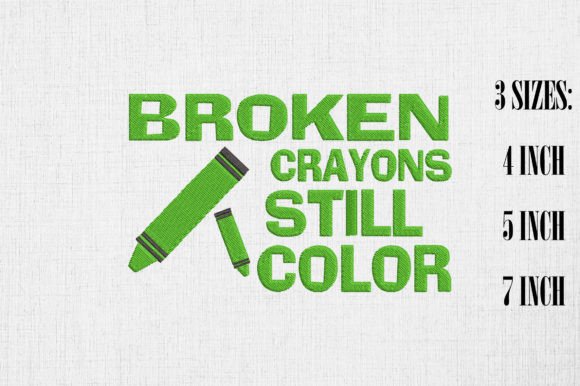
The title alone, Mental Health Broken Crayons Still Color, carries an immediate emotional weight. It feels modern, soft, and deeply relatable. In a sea of generic floral patterns or farmhouse quotes, this design stands out because it speaks to resilience and creativity. It strikes a balance between cute and serious, making it perfect for the current market trend where buyers want products that support mental health awareness without being overly clinical. The concept of broken crayons still coloring suggests that even when things are imperfect, value remains. That is a powerful message for a craft fair product.
First Impressions and Visual Appeal
When I first visualize the Mental Health Broken Crayons Still Color design, I imagine it as a focal point rather than a subtle accent. The imagery of crayons implies vibrant thread colors, which will naturally draw the eye in a crowded booth. For an Etsy seller or a boutique maker, this design offers high visual appeal because it allows for creative color matching. You can use neon threads for the crayons against a dark background for contrast, or pastel threads on a cream canvas for a softer, more approachable look.
The design likely works best as a medium-sized piece. If it is too small, the message gets lost. If it is too large, it might overwhelm smaller items like caps or pouches. On a standard tote bag or a kitchen towel, however, this design commands attention. It photographs beautifully for online listings because the subject matter is inherently colorful and engaging. Customers scrolling through Instagram or browsing Etsy often stop for designs that tell a story instantly, and this one does exactly that.
Product Versatility: From Aprons to Patches
One of the strongest selling points of Mental Health Broken Crayons Still Color is its versatility across different embroidery file applications. Here is how I would deploy this design for maximum sales impact:
- Tote Bag Design: A large embroidered tote is a staple at any craft fair. Placing this design centrally on a canvas bag makes it a statement piece. Shoppers love carrying bags that reflect their values, and this design serves as a conversation starter about mental health.
- Apron Embroidery: For home decor lovers, an apron featuring this motif is both functional and inspirational. It fits perfectly in the "kitchen" category of a market stall, appealing to bakers and cooks who appreciate the metaphor of creating something beautiful from imperfect ingredients.
- Tea Towel Embroidery: Similar to aprons, tea towels are low-cost impulse buys. This design adds a premium feel to a basic linen item, increasing the perceived value of the handmade product.
- Embroidered Patch: If the design includes a clean border, it could be digitized as a sew-on patch. These are highly popular among younger demographics and can be sold separately or attached to denim jackets and backpacks.
- Fabric Pouches and Caps: For smaller inventory, this design works well on zippered pouches or as a centered motif on a baseball cap. However, curvature must be considered here.
Practical Production and Selling Points
From a production standpoint, the success of Mental Health Broken Crayons Still Color depends heavily on execution. When preparing for batch production, you need to consider how easy the design is to stitch out consistently. Designs with complex details can sometimes lose clarity if the stitch density is too high or if the fabric texture interferes with the needle.
I always advise checking the stitch density before committing to a full run. If the crayon tips have tiny details, they might get muddy on textured fabrics like heavy canvas or thick terry cloth. For a commercial embroidery business, consistency is key. You want every finished product to look identical so that your brand reputation remains strong. This design should be repeatable for batch production, allowing you to create stacks of matching items quickly.
Photography is another critical factor. Because the design relies on color contrast, ensure your thread colors pop against the fabric. A light gray design on a white shirt might wash out, while the same design on a navy blue shirt will shine. Creating a real mockup is essential before listing these items online. Do not rely solely on a digital printable mockup; take photos of the actual stitched sample to show customers the true texture and depth of the work.
Careful-Use Notes for Maximum Clarity
While this design has great potential, there are specific scenarios where it might struggle. Small lettering or intricate lines can disappear on curved surfaces like caps. If you attempt to embroider this on a very small area, the message may become illegible. Additionally, working with dark fabric requires careful selection of underlay stitches to prevent the design from sinking into the material.
Textured towels can also pose a challenge. If the loops of the towel are too deep, the needle might hit them, causing skipped stitches or distortion. In these cases, using a cut-away stabilizer and hooping the fabric tightly is non-negotiable. Always test the design on scrap fabric first to see how the fabric texture interacts with the stitching pattern.
Designer's Checklist for Success
Before you head to your next market with your booth filled with handmade gifts featuring this design, follow these practical steps to ensure quality:
- Test on Scrap Fabric: Never start with your final product. Stitch the design on a piece of the same material you plan to sell to check for puckering or tension issues.
- Check Thread Contrast: Ensure the thread colors chosen make the text and imagery distinct. High contrast sells better.
- Review Spacing and Hoop Size: Confirm that the hoop size accommodates the design dimensions without cutting off parts of the image. Adjust spacing if necessary to fit the specific garment.
- Inspect Stitch Density: Look closely at the finished sample. Are there gaps? Is the fabric visible through the stitches? Adjust the settings if needed.
- Use the Right Stabilizer: Heavy-duty projects like tote bags require sturdy stabilizers to maintain shape over time.
- Create Real Mockups: Photograph the physical item in natural light to capture the true look of the embroidery.
- Confirm Commercial Licensing: Before selling finished products, verify that your digital embroidery file license allows for commercial use. Check the terms provided with the Mental Health Broken Crayons Still Color download.
In conclusion, Mental Health Broken Crayons Still Color is a design with significant heart and marketability. It resonates with buyers looking for meaningful, small shop product options that go beyond simple decoration. By paying attention to production details, choosing the right materials, and presenting the items professionally, you can turn this design into a bestseller at your next event. Whether it ends up on a dress, a scarf, or a pillow cover, the message of hope and creativity will shine through, making it a valuable addition to any design assets collection.